About Michael
Veteran psychiatric nurse practitioner — telehealth built for those who served.
Built for veterans, first responders, and everyone still carrying it.
Most psychiatric providers learn about trauma from a textbook. I learned it in uniform and in a cardiac ICU.
I’m Michael Dionne, a board-certified Psychiatric Nurse Practitioner with a Doctorate in Nursing Practice. I built Reforge Psychiatry because the care veterans need isn’t always the care they’re getting.
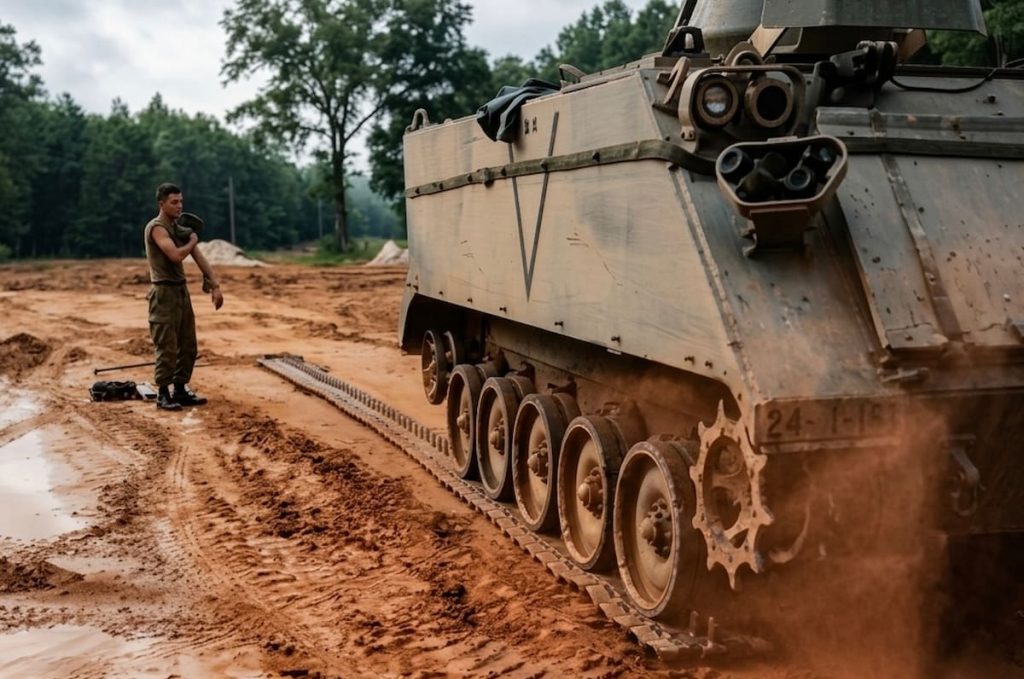
Breaking Track
Fort Stewart, Georgia. 1992–1994 with the 24th Infantry Division as an 11H heavy anti-armor mechanized infantryman — the kind of MOS where nobody asks how you’re doing.
The Military Years
I enlisted in the U.S. Army in 1991 and served six years — first as an 11H infantryman at Fort Stewart, then reclassified to 91C and finished out at Fort Bragg as a military nurse. I know what it means to operate in an environment where showing signs of struggle isn’t just uncomfortable — it’s professionally dangerous. I know the culture.
I got out in August of 1997, thinking PTSD was a life sentence — because that’s what we saw with Vietnam veterans. No one fixed that. We just watched.
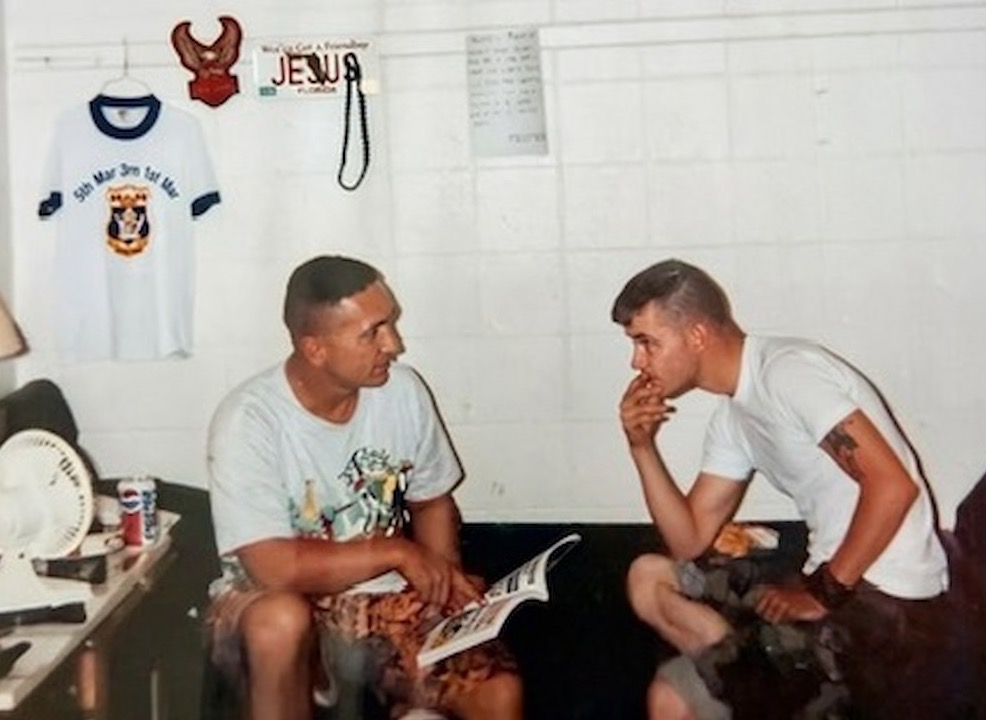
3rd of the 15th
3rd Battalion, 15th Infantry — “Can Do.” Between details and formations, the real conversations happened in the barracks. No rank, no protocol — just two guys figuring it out.
Before I Knew What I Was Seeing
After I got out in 1997, I worked as an LPN in urgent care centers and nursing homes across New Hampshire, Iowa, and California. In 2008, I earned my RN, worked in several Cardiac ICUs, and ended up at Travis Air Force Base in 2011. Sixteen years of critical care, where the margin for error is thin, and the decisions are fast. That background made me a precise, high-stakes clinician.
Travis is where things started to shift for me. I was one of five civilians backfilling a CVICU that ran on about thirty active-duty staff — mostly officer nurses, plus enlisted support — cycling through six-month deployments with another three to six months of pre-deployment workup they called “being in the bucket.” Over four years, I covered a lot of those deployments. Got to know many service members. Watched the same patterns come back from downrange again and again.
The cath lab was where I had time to actually talk. Patients are awake through those procedures — before, during, and after — and that’s where I started noticing what wasn’t in the cardiac workup. Heart rates spiking on medications that shouldn’t do that. Activating reactions no one could explain. Patients labeled anxious, non-compliant, difficult — when what was actually happening was psychiatric, not cardiac. At the time we didn’t have the framework to name it. If someone told you their meds made them feel crazy, the answer was usually “well, that’s probably just from that.” I sat with that gap for years before I had the tools to close it.
The ones I watched closest were coming back from Afghanistan and Iraq with 100% disability ratings. They survived combat. They made it home. And then they got handed a coping plan and a prescription and were told to manage it. That was supposed to be the system working.
It didn’t sit right. Not because the providers didn’t care — most of them did. But because the model was built to stabilize, not resolve. And I kept seeing the same people cycle back through.
Years later, doing mental health work with homeless populations during COVID, I kept meeting veterans. That’s what pulled me back. The people I served with deserved better than the system they came home to — and someone who actually knew the culture had to build something different.
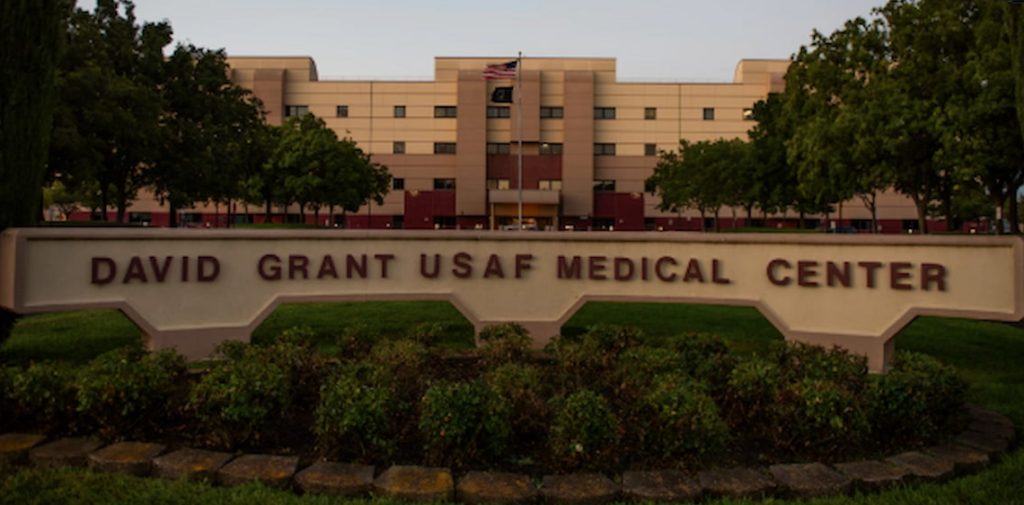
David Grant
David Grant USAF Medical Center — Travis Air Force Base. The Air Force’s largest hospital on the West Coast. Years of care and conversations — cath labs, hospital rooms, follow-up calls home — with the service members who would eventually point me toward this work.
What Changed My Approach
The science is what changed my career. Polyvagal theory. Internal Family Systems. Evidence-based pharmacotherapy that targets the underlying mechanism rather than just dampening symptoms. Things that don’t just manage PTSD — they change its trajectory.
That’s when I went back to school, earned my DNP, and built a practice around the population I know best.
Why “Reforge”
The name isn’t an accident. Reforging isn’t about going back to who you were before — that person doesn’t exist anymore, and pretending otherwise is a therapeutic dead end. It’s about taking what you have now — the experience, the damage, the hard-won knowledge — and building something that actually works.
I built Reforge Psychiatry specifically for veterans, active duty service members, first responders, and their families. Not as an add-on to a general practice. Not as a niche I picked because the market looked good. This is the only population I serve, because it’s the one I understand from the inside.
Our goal isn’t just to make you feel better for a few weeks. It’s remission — getting you to a place where PTSD or depression isn’t running your life anymore. That’s a different standard than most providers hold themselves to, and it changes how we approach everything.
I’m not going to try one or two things and send you somewhere else when they don’t work. If the first approach doesn’t get us where we need to be, we dig deeper — functional medicine labs, lifestyle integration, whatever the evidence supports. And if what you need is outside my scope, I’ll find someone I’ve personally vetted and walk you through the transition. You don’t get handed off. You get helped.
I know how VA documentation works. I know how disability ratings interact with treatment records. I know why half the veterans reading this haven’t told their current provider the full story — and I know how to build a treatment relationship where they actually can.
Veteran Psychiatric Nurse Practitioner — Credentials
Michael R. Dionne, DNP, PMHNP-BC Founder & Psychiatric Nurse Practitioner, Reforge Psychiatry
- Doctor of Nursing Practice (DNP)
- Board-certified Psychiatric Nurse Practitioner — ANCC (PMHNP-BC) and AANPCB
- IPI Ketamine Medical Provider Training Program — Integrative Psychiatry Institute
- CAMS-trained — Collaborative Assessment and Management of Suicidality
- U.S. Army veteran
- Heavy Anti-Armor Mechanized Infantryman, TOW gunner (11H), Fort Stewart, GA 1992–1994.
- Licensed Vocational Nurse (91C), Fort Sam Houston / Fort Bragg / Fort Drum 1994–1997.
- 16 years of critical care nursing — cardiac catheterization lab and ICU, including Travis AFB
- Licensed in: New Hampshire · Idaho
Ready to Talk?
Schedule a free 15-minute consultation. No paperwork, no sales pitch. If Reforge is the right fit, we build a plan. If it's not, I'll tell you that honestly and point you somewhere that is.